Brand evaluation
Are Lucky Charms breakfast cereal healthy for kids?
Lucky Charms combine oat-based cereal with marshmallow pieces. A ¾-cup serving lists about 10g added sugar (Tier E), and the charms use several artificial dyes.
Reviewed September 2026
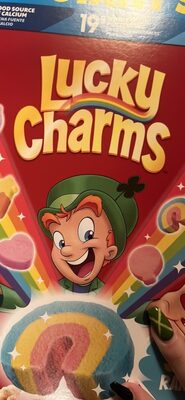
Tier E · 10g added sugar · dyes in marshmallows
Fun shapes and colors target kids; the sugar and dye profile matches other dessert-like cereals.
General Mills · ¾ cup (27g) without milk
Nutrition Facts snapshot
We score Lucky Charms using the Added Sugars line on the Nutrition Facts panel for the serving size printed on the box (¾ cup (27g) without milk). Total sugars include any naturally occurring sugar in grains or milk you add at the table; for dry cereal, nearly all sugars in this product are added during manufacturing.[3]
At 10g added sugar per serving, one bowl without milk uses 40% of the American Heart Association’s daily added-sugar cap for children over 2 (25g) and 53% of the tighter 19g guidance often cited for ages 2–5.[1] That is before second helpings, sweetened milk, or juice.
Per serving (¾ cup (27g) without milk) — typical US label, verify your box
| Nutrient | Amount | Why it matters |
|---|---|---|
| Calories | 140 | Energy density; easy to over-pour dry cereal |
| Total sugars | 12g | Includes added and any natural sugars listed |
| Added sugars | 10g | Primary input for our tier score |
| Dietary fiber | 2g | Slows digestion; most kids’ bowls stay low here |
| Protein | 3g | Higher protein breakfasts tend to satisfy longer |
| Sodium | 210mg | Often overlooked in sweet cereals |
How one bowl fits a daily sugar budget
Breakfast should not spend most of a child’s added-sugar allowance. Dietary Guidelines treat added sugars as a small share of calories; in practice, a single Tier E cereal serving often leaves little room for lunchbox fruit snacks, flavored yogurt, or dessert.[2]
Pour size matters. Many families serve more than the labeled cup or ¾-cup. Doubling the portion roughly doubles added sugar. Whole milk adds about 12g natural lactose sugar per cup—separate from added sugar, but still relevant for total carbohydrate at breakfast.
Dashed line: AHA ~19g (ages 2–5) (19 g added sugar)
Lucky Charms
10g
AHA daily cap (2–18y)
25g
Front-of-box claims vs the back panel
Lucky Charms are explicitly a treat cereal: marshmallows are not a whole food group.
Whole-grain oats appear in the base, but marshmallows dilute any “oatmeal for breakfast” narrative.
Common marketing language and what the label shows
| What you might hear | What the label shows |
|---|---|
| Magical marshmallows | Marshmallows are sugar, corn syrup, and gelatin with artificial colors. |
| Whole grain oats in the cereal | Oats are present, but added sugar still hits 10g per small serving. |
| Gluten-free label on some boxes | Allergen info only; does not change sugar tier. |
Sweeteners, dyes, and grain claims
Parents often sort out marshmallows to reduce sugar; that helps slightly but the base cereal still contains added sugar.
Sugar, corn syrup, and dextrose sweeten both the oat pieces and marshmallows.
The ingredient list includes artificial colors (Red 40, Yellow 5, Yellow 6, Blue 1). Some families limit dyes when managing attention or behavior, though individual response varies.[4]
Second bowl, bigger pour, and milk
If a child eats 1½ servings (15g added sugar before rounding) plus a cup of whole milk, breakfast can exceed the entire 19g added-sugar target for preschoolers even without juice.
Child care and school breakfast programs that follow CACFP limits often cap added sugar in cereals at 6g per dry ounce (about 21g per 1-ounce equivalent serving in some age groups). This product is far above that threshold, so it is unlikely to qualify as a reimbursable cereal even if kids love the taste.[5]
How Sugar Check tiers this cereal
We assign Tier E because 10g added sugar per ¾ cup (27g) without milk falls in our highest-sugar band for ready-to-eat cereal. Tiers are a screening tool: they do not measure vitamin fortification, price, or whether your child eats vegetables at dinner.
Fortification with iron and B vitamins is common in US cereals but does not offset a high added-sugar load for daily breakfast. A fortified dessert is still a dessert-like breakfast from a sugar-budget perspective.
Lower-sugar swaps
Lucky Charms is Tier E (10g added sugar per ¾ cup (27g) without milk). For everyday breakfast, most families aim for Tier A–C cereals with roughly 6g or less added sugar—or plain oats you sweeten with fruit.
Questions parents ask
If I pick out the marshmallows, is it Tier C?
Removing charms lowers sugar somewhat, but the remaining oat cereal is still sweetened. You would need to measure a new portion to estimate grams; we score the product as sold.
Do the dyes in Lucky Charms matter?
Some children may be sensitive to artificial colors; FDA and EU policies differ. Dyes do not affect our sugar tier but are a separate parental decision.[4]
Are Lucky Charms better than Cocoa Puffs?
Both are Tier E with similar added-sugar ranges. Cocoa Puffs emphasize chocolate flavor; Lucky Charms emphasize marshmallows and dyes.
Can this fit CACFP child-care menus?
Unlikely. CACFP cereal standards cap added sugar far below this product’s labeled serving.[5]
More cereal evaluations
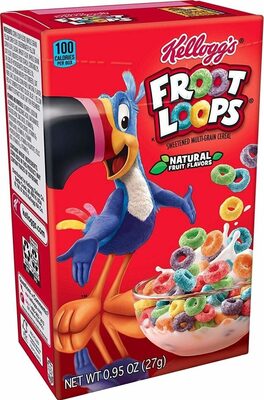
Kellogg's
Are Froot Loops breakfast cereal healthy?
12g added sugar · Tier E · High Sugar
Read the evaluation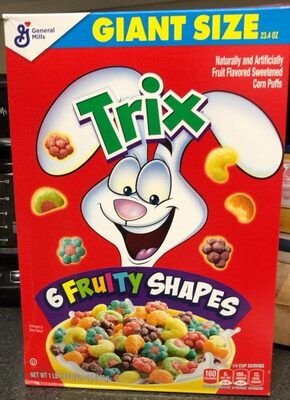
General Mills
Are Trix breakfast cereal healthy?
10g added sugar · Tier E · High Sugar
Read the evaluationGeneral Mills
Are Cookie Crisp breakfast cereal healthy?
9g added sugar · Tier E · High Sugar
Read the evaluation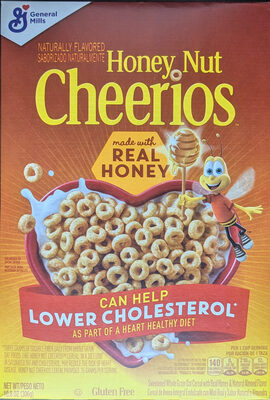
General Mills
Are Honey Nut Cheerios breakfast cereal healthy?
9g added sugar · Tier E · High Sugar
Read the evaluationReferences
- American Heart Association. Added Sugars and Cardiovascular Disease Risk in Children
- USDA and HHS. Dietary Guidelines for Americans, 2020–2025
- FDA. Changes to the Nutrition Facts Label
- Benton et al.. Artificial food colors and attention-deficit/hyperactivity symptoms
- USDA FNS. CACFP meal pattern requirements
Evaluations are screening aids based on packaged-food labels, not medical advice. Added-sugar limits cited here follow AHA, FDA, and Dietary Guidelines framing. Always confirm the Nutrition Facts panel on the box you serve—formulations change.