Ingredient guide
Monk Fruit Extract in Kids' Food: No FDA ADI, Erythritol Blends
Monk fruit (Luo Han Guo) extract is a high-intensity sweetener derived from mogrosides, compounds 150 to 300 times sweeter than sucrose. FDA has reviewed multiple GRAS notices but has not set a formal ADI. EFSA in 2019 concluded the toxicity database was "insufficient to conclude on the safety" of mogrosides as a food additive in the EU, citing unresolved testicular effects in a 90-day rat study. Monk fruit does not count as added sugar. Most tabletop packets list erythritol first because the extract is too intensely sweet to use alone. Without an ADI, parents cannot run the same milligram formula available for sucralose or Ace-K.
Reviewed September 2026
Not added sugar; no formal ADI exists
FDA reviewed GRAS notices but set no ADI. EFSA flagged insufficient toxicity data for EU approval. Packets usually list erythritol first as a bulking agent.
Also listed as: monk fruit, luo han guo, mogroside, Siraitia grosvenorii, monk fruit extract
What monk fruit is
Monk fruit extract comes from Siraitia grosvenorii, a gourd native to southern China also called Luo Han Guo. The sweetness comes from mogrosides, a family of cucurbitane glycosides. Mogroside V is the principal sweetening component, estimated at 150 to 300 times sweeter than sucrose.
It is not an added sugar.
A yogurt can list 0 g added sugars and still name monk fruit extract. Cane sugar in the same cup still counts toward the American Heart Association 25 g ceiling for ages 2 to 18. Under age 2, AHA and the Dietary Guidelines say 0 g added sugars, and monk fruit does not change that number either direction.
Kids packs print "monk fruit extract," "luo han guo," or "mogroside." Tabletop packets blend the extract with erythritol or allulose so the powder has enough volume to scoop.
GRAS notices and the missing ADI
FDA has not set an acceptable daily intake for monk fruit. The agency's high-intensity-sweetener page says an ADI "has not been specified." Instead, companies have filed GRAS (generally recognized as safe) notices for named extracts. GRN 301, the earliest, described Luo Han Guo fruit extract as a sweetener and flavor enhancer at good-manufacturing-practice levels, excluding infant formulas and meat and poultry. Later notices (GRN 359, 522, 556, 629) cover other preparations and juice concentrates.
GRN 629 estimated daily intakes for high consumers at 1.6 to 22 mg/kg body weight per day, depending on the mogroside V concentration of the product. Those numbers come from the notifier's calculation, not from an FDA-set ceiling.
Because no ADI exists, you cannot run the milligram-per-kilogram formula that works for sucralose or Ace-K. The shopping checks are the ingredient name, the blend partner, and the Added Sugars grams.
EFSA took a different path. In 2019, the panel concluded that the toxicity database on monk fruit extract was "insufficient to conclude on the safety of the use of Monk fruit extract as a food additive." Testicular effects observed in a 90-day rat study could not be dismissed. As of October 2024, the EU has authorized only one specific aqueous extract under Regulation 2024/2345; highly purified mogrosides remain unapproved in Europe.
Monk fruit versus sweeteners that have a published US ADI
| Sweetener | US path | Published ADI | Added sugar |
|---|---|---|---|
| Monk fruit / Luo Han Guo extract | GRAS notices | None specified | No |
| Stevia (Reb A) | GRAS notices | JECFA 4 mg/kg as steviol | No |
| Sucralose | Food additive 21 CFR 172.831 | 5 mg/kg/day | No |
| Ace-K | Food additive 21 CFR 172.800 | 15 mg/kg/day | No |
| Cane sugar or HFCS | Added sugars line | No ADI; AHA 25 g/day ages 2 to 18 | Yes |
How to use this page in the snack aisle
Read the ingredient list for "monk fruit extract," "luo han guo," or "mogroside." Then look for erythritol, allulose, or cane sugar in the same list. Then read the Added Sugars grams.
A "naturally sweetened" banner is not a milligram disclosure and is not proof of 0 g added sugars.
AAP groups monk fruit with other nonnutritive sweeteners and gives no advice for children under 2. If the child is under 2, ask the pediatrician before building a daily monk-fruit yogurt habit.
Formula and worked examples
There is no FDA ADI to divide. The formula that works is the AHA sugar formula: added-sugar grams times servings, divided by 25 for ages 2 to 18. Any grams above 0 exceed the line for a child under 2.
A monk-fruit yogurt with 0 g added sugars uses 0% of the 25 g ceiling. A monk-fruit yogurt with 9 g added sugars from cane sugar uses 36%. The extract does not cancel the 9 g.
A tabletop packet of monk fruit plus erythritol adds 0 g added sugars but delivers a polyol load. If keto cookies follow at snack time, those erythritol grams pile onto the gut budget, not the AHA sugar budget. Bloating and loose stools are the polyol signal in kids who overdo it.
Dashed line: AHA child ceiling (25 g)
Monk fruit yogurt, 0 g added sugars
0 g
Monk fruit yogurt plus 9 g cane sugar
9 g
That yogurt plus a 15 g juice box
24 g
Same day plus candy 10 g
34 g
Worked checks when monk fruit is on the list
| What you have | Added sugars | What the extract changes | What to do next |
|---|---|---|---|
| Yogurt, monk fruit, 0 g added sugars | 0 g | Sweet taste, no AHA grams | Fits the sugar ceiling; still an NNS serving |
| Yogurt, monk fruit + 9 g cane sugar | 9 g | Nothing; 9 g still count | 36% of 25 g |
| Packet, monk fruit + erythritol | 0 g | Polyol load from erythritol | Watch gut tolerance if more polyols follow |
| Child under 2, any monk-fruit food | Read the line | No AAP NNS advice | Ask the pediatrician |
How to read the result and what to do next
A 0 g Added Sugars stamp means the sugar meter reads zero. It does not mean the product is sweetener-free. Water and plain milk skip both the sugar meter and the NNS question entirely.
WHO's 2023 NSS guideline covers monk fruit as a non-sugar sweetener and conditionally recommends against using NNS for weight control. That guideline does not create an ADI where FDA declined to set one.
What US kids consume
No official USDA table reports milligrams of mogroside V eaten each day by American children.
AAP's NHANES 2009-2012 figure on NNS prevalence predates much of the monk-fruit market expansion. Newer products are more likely to carry the name. They still omit milligrams. A 2023 bibliometric analysis of the monk fruit research literature found that most health-effect studies (antihyperglycemic, antihyperlipidemic, antidiabetic) remain confined to animal models, with limited clinical trial evidence in any age group.
Where monk fruit shows up in kids food
Reduced-sugar yogurt, flavored water, some protein drinks, and tabletop packets. Monk fruit is less common in diet cola than aspartame or sucralose, partly because mogrosides have a lingering sweet tail that formulators find harder to mask in carbonated drinks.
If erythritol is the first ingredient and monk fruit is last, the packet is mostly polyol. The monk fruit contributes sweetness; erythritol contributes bulk and a cooling mouthfeel.
What the evidence says
FDA has not questioned the GRAS determinations for the named extracts it reviewed. Those "no questions" letters are not child feeding trials.
A 2025 PRISMA-guided systematic review identified five RCTs evaluating monk fruit extract in humans. The trials showed postprandial glucose reductions of 10 to 18% and insulin response reductions of 12 to 22% compared with sugar controls. No severe adverse effects were observed. All five trials were in adults.
In the gut, mogrosides undergo deglycosylation by intestinal flora within about 24 hours, yielding mogrol as the terminal metabolite. A 2020 in vitro study using human fecal homogenates confirmed that mogrosides V, IIIe, siamenoside I, and isomogroside V all share this metabolic fate, which supports a group rather than individual ADI approach if one is ever set.
A 2026 mouse study compared monk fruit extract, sucralose, and sucrose at equivalent sweetness in high-fat-diet-induced obese mice over 8 weeks. Monk fruit extract did not promote additional weight gain and reduced fasting blood glucose, while sucralose impaired glucose tolerance. This is a single animal study and cannot be projected onto a child's morning yogurt.
"From fruit" is not a proof of safety in toddlers. The extract is a high-intensity sweetener separated from the rest of the fruit by industrial processing.
USDA Organic and WHO
Organic snacks can use organic monk fruit preparations that meet NOP rules. Organic monk fruit is still a high-intensity sweetener, and organic cane sugar in the same product still adds grams to the panel.
The organic seal answers a production-method question. It does not change the sweetness intensity or the missing ADI.
Limits, edge cases, and safety
This page cannot compute an ADI share because FDA has not published one. That gap is the regulatory fact, not an oversight in the article.
EFSA flagged testicular effects in rats at a dose far above food-use levels. FDA reviewed different data packages for different preparations and did not raise the same concern. Neither agency has published a child-specific safety assessment.
If the child has a cucurbit or gourd allergy, skip the extract and tell the clinician. Cross-reactivity data for monk fruit are sparse.
Juice from monk fruit is not the same product as a high-purity mogroside extract. If the label says "monk fruit juice concentrate," read Added Sugars and Total Sugars the usual way.
Snacks that do not list Monk fruit
Open a product page in an aisle where this name is common. We check the stored ingredient text, not a front-of-pack claim.
A snack can skip monk fruit and still add cane sugar or juice concentrate. Count the Added Sugars grams.
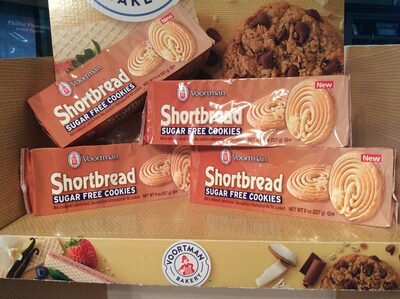
Shortbread Cookies zero sugar
- No added sugar
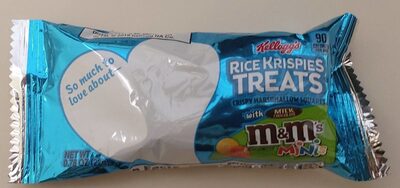
Rice Krispies- M&M minis
- No added sugar
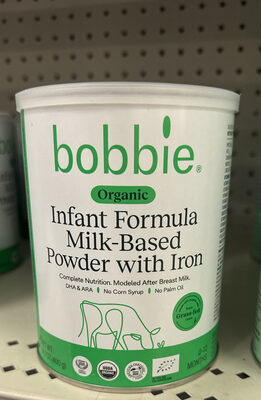
Infant Formula Milk-Based Powder With Iron
- No added sugar
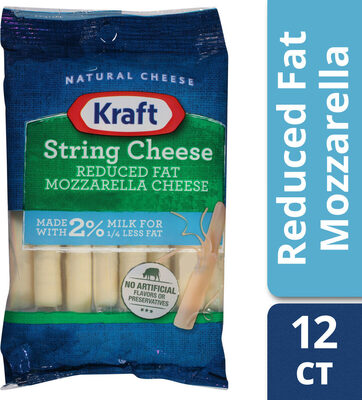
String cheese
- No added sugar
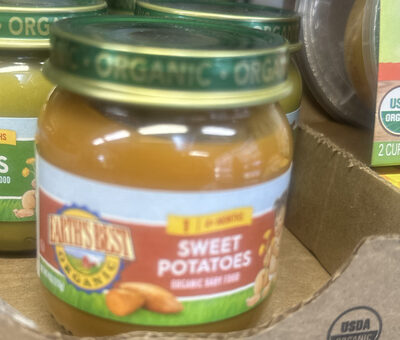
Sweet Potatoes First Stage
- No added sugar
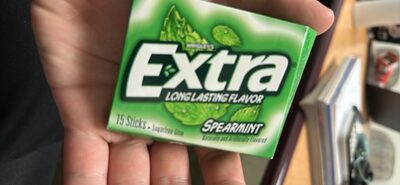
Spearmint Sugarfree Gum
- No added sugar
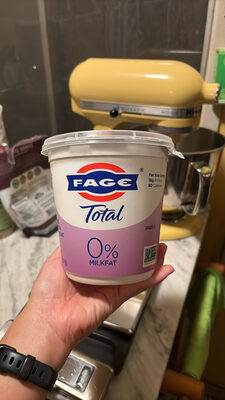
Total 0% Milkfat
- No added sugar
Frequently asked questions
Does monk fruit count as added sugar?
No. Monk fruit extract is a high-intensity sweetener that adds sweetness without calories. A drink can show 0 g on the Added Sugars line and still list monk fruit extract. Cane sugar or juice concentrate in the same product still counts toward the AHA 25 g child ceiling.
How much monk fruit is safe for a child?
FDA reviewed GRAS notices but has not set a formal ADI. There is no official milligram formula for monk fruit the way there is for sucralose (5 mg/kg) or Ace-K (15 mg/kg). A 2025 systematic review of 5 RCTs found monk fruit reduced postprandial glucose by 10 to 18% with no severe adverse effects, but those were adult trials. AAP gives no NNS guidance for children under 2.
Why is erythritol listed first on the packet?
Mogroside V is 150 to 300 times sweeter than sugar, so a tiny amount sweetens the entire packet. Brands list erythritol first because it provides the bulk, texture, and volume. Those are two separate ingredients with different health considerations. Erythritol can cause GI upset at high doses.
Is monk fruit the same as fruit juice?
No. A high-purity mogroside extract is not fruit juice. It contains no fructose and no sugar. If a label says "juice," read Total Sugars and Added Sugars the usual way.
Can USDA Organic kids food contain monk fruit?
Yes. Organic snacks can use organic monk fruit preparations that meet NOP rules. Organic monk fruit is still a high-intensity sweetener, and organic sugar in the same product still adds grams.
Why is monk fruit not approved in the EU?
EFSA concluded in 2019 that the toxicity database was insufficient to establish safety as a novel food additive, citing unresolved testicular findings in a 90-day rat study. As of October 2024, only one specific aqueous monk fruit extract has been authorized in the EU. Highly purified mogrosides remain unapproved there.
Related tools and guides
References
- FDA. High-Intensity Sweeteners
- FDA GRAS Notice Inventory. GRN No. 301 Siraitia grosvenorii Swingle (Luo Han Guo) fruit extract
- FDA. Aspartame and Other Sweeteners in Food
- Baker-Smith et al., AAP Pediatrics 2019 (reaffirmed 2025). The Use of Nonnutritive Sweeteners in Children
- FDA. Added Sugars on the Nutrition Facts Label
- WHO, 2023. Use of non-sugar sweeteners: WHO guideline
- Almiron-Roig et al., Appetite 2023. Impact of acute consumption of beverages containing plant-based or alternative sweetener blends (SWEET beverages trial)
- USDA AMS. The National List of Allowed and Prohibited Substances
- EFSA FAF Panel, 2019. Safety of use of Monk fruit extract as a food additive in different food categories
- Kaim et al., Foods 2025. Why Does Monk Fruit Extract Remain Only Partially Approved in the EU? Regulatory Barriers and Policy Implications
- Yeung, Frontiers in Nutrition 2023. Bibliometric analysis on the literature of monk fruit extract and mogrosides as sweeteners
- Kaim et al., Nutrients 2025. Monk Fruit Extract and Sustainable Health: A PRISMA-Guided Systematic Review of Randomized Controlled Trials
- Bhusari et al., Regul Toxicol Pharmacol 2020. Comparative In Vitro Metabolism of Purified Mogrosides Derived from Monk Fruit Extracts
- Woo et al., Food Sci Nutr 2026. Mogroside-Rich Monk Fruit Extract Improves Glycemic Control Without Promoting Additional Weight Gain in HFD-Induced Obese Mice
Label guides are screening aids for packaged food, not a diagnosis. They are not a substitute for a pediatrician or registered dietitian. Added-sugar limits cited here come from AHA, CDC, FDA, and the Dietary Guidelines. Quantity always comes from the Nutrition Facts Added Sugars line.