Granola bars sit in a awkward spot in the pantry. They look like health food. Many are closer to cookies. Search traffic backs that up: parents query granola bar with least sugar, lowest sugar granola bars, granola bars less sugar, and best low sugar bars for kids because the category spans 0g-added-sugar fruit bars and 12g candy-style wedges in the same aisle.
We rated every bar in our live catalog on added sugar, tier, protein, fiber, and common allergens. Browse the full bars database to filter by tier, allergens, and age. Below, major kids bars from our editorial list link to a product page when we have verified label data in the catalog.
What counts as “low sugar” for a kids bar
Our Tier C cutoff is 3g or less added sugar per serving. Tier B is zero added sugar. Tier A is sugar free under FDA labeling (under 0.5g total sugar).
The AHA suggests keeping added sugar under 25g per day for children 2 to 18. A bar with 9g added sugar (common for chocolate chip kid bars) is more than one third of that budget in a single snack (AHA guidance).
USDA school meal research notes granola and cereal bars as meaningful added-sugar sources at breakfast (USDA added sugars in school meals). That does not mean bars are off limits. It means the label matters more than the cartoon wrapper.
Snapshot: bars in our database
| Tier | Added sugar rule | What you will find |
|---|---|---|
| A | under 0.5g total sugar | Rare; some nut/seed bars with stevia or monk fruit |
| B | 0g added | Fruit bars sweetened only with fruit, some protein bars |
| C | 1–3g added | Best balance for daily lunchboxes |
| D | 4–7g added | “Better than candy” but not low sugar |
| E | 8g+ added | Most chocolate chip kid bars, many “chewy” brands |
Dashed line: AHA child daily ceiling (25 g added)
RXBAR Kids (~1g added)
1g
Clif Kid ZBar (9g added)
9g
Nature Valley 2-bar pouch (11g added)
11g
Two ZBars in one day
18g
ZBar plus sugary drink (example)
25g
Median kid-facing bars still cluster in Tier D and E. The good news: Tier C options exist in every major retailer if you filter by the Added Sugars line.
Lowest sugar granola and snack bars (label-backed examples)
These are products parents and dietitians repeatedly name in low-sugar roundups. Values are from manufacturer Nutrition Facts and USDA-branded food entries; confirm your package.
| Bar | Added sugar (typical) | Protein | Fiber | Tier (our rules) |
|---|---|---|---|---|
| Made Good mixed berry granola mini | 6g per 24g bar on some boxes; mini sizes vary | 2g | 2g | Often Tier D; check mini vs full size |
| RXBAR Kids (mini) | 0–1g on unsweetened fruit/nut lines | 5g+ | 2g | Tier B/A depending on flavor |
| Nature Valley Crunchy Oats ’n Honey (2-bar pouch) | 11g per 42g serving | 3g | 2g | Tier E (not low sugar) |
| Clif Kid ZBar chocolate chip | 9g per 36g bar | 2g | 2g | Tier E |
| Quaker Chewy dipps / classic chewy | 7–10g common | 2g | 1g | Tier D–E |
| Kind Minis / Kids | 3–5g on many flavors | 3g | 3g | Tier C–D by flavor |
| Larabar (fruit + nut) | 0g added on classic fruit lines | 4g | 4g | Tier B (total sugar from dates) |
| Perfect Bar Kids Peanut Butter | 0g added | 5g | 1g | Tier B (refrigerated) |
Compare tiers: same aisle, very different Added Sugars lines
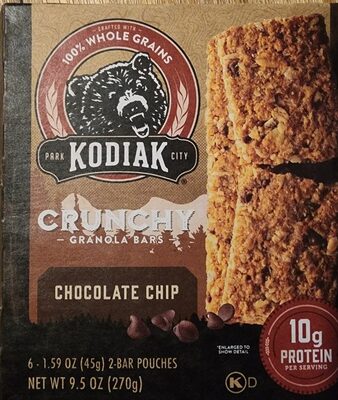
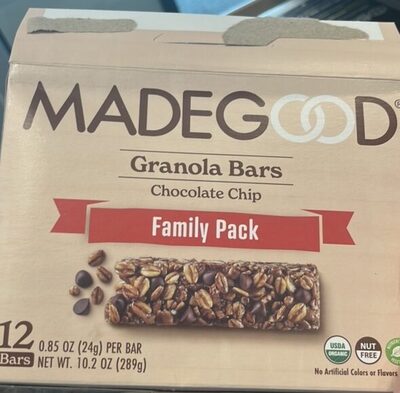
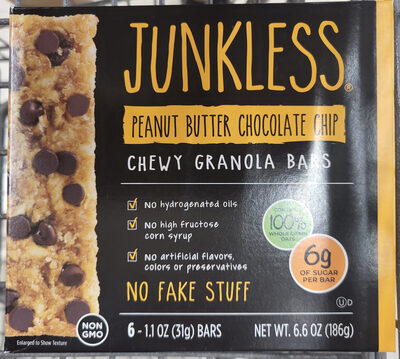
Dashed line: Tier C cutoff (3g) (3 g added)
RXBAR Kids / mini (unsweetened lines)
0–1g
Larabar classic fruit + nut
0g added
Kind Kids / minis (lower-sugar flavors)
3–5g
Quaker Chewy (classic)
7–10g
Clif Kid ZBar chocolate chip
9g
Nature Valley Crunchy Oats ’n Honey (2-bar pouch)
11g
Use this table to sanity-check marketing. “Whole grains” and “organic” do not imply low added sugar.
Tier A and B: 0g added sugar (catalog pages)
Sweetness comes from dates, fruit, or dairy ingredients. Total sugar can still be high when fruit is concentrated.
| Product | Added | Protein | Tier | Our page |
|---|---|---|---|---|
| RXBAR Kids Berry Blast | 0g | 5g | B | ✓ |
| Larabar Kid Chocolate Chip Cookie Dough | 0g | 2g | B | ✓ |
| That’s It Mini Apple + Strawberry | 0g | 0g | B | ✓ (high natural sugar) |
| Perfect Bar Kids Peanut Butter | 0g | 5g | B | ✓ |
| RXBAR Kids Protein Oat Bar | 0g | 4g | B | ✓ |
| Thunderbird Kids Hazelnut Coffee Cacao | 0g | 2g | B | ✓ |
| Skout Organic Kids Blueberry | 0g | 2g | B | nut-free |
| Amara Smoothie Melts Strawberry | 0g | 1g | B | toddler texture |
Tier C: 1–3g added sugar
| Product | Added | Protein | Tier | Notes |
|---|---|---|---|---|
| GoMacro Kids Chocolate Chip | 3g | 3g | C | organic, nut-free |
| 88 Acres Chocolate & Sea Salt | 2g | 4g | C | nut-free facility |
| Bobo’s Oat Bar Mini Original | 3g | 2g | C | oat cookie texture |
| Blake’s Seed Based Raspberry | 3g | 3g | C | nut-free |
| Cerebelly Smart Bar Strawberry Banana | 1g | 2g | C | ages 12m+ |
| Yumi Bar Sweet Potato | 1g | 1g | C | soft toddler bar |
Our best low-sugar granola bars for kids page auto-ranks the top ten Tier C-or-better bars by protein and fiber.
Tier D and E: popular lunchbox bars to know
| Product | Added | Tier | Our page |
|---|---|---|---|
| KIND Kids Chewy Chocolate Chip | 5g | D | ✓ |
| Made Good Mixed Berry Granola Bar | 5g typical | D | top-8 allergen free |
| Clif Kid ZBar Chocolate Chip | 9g | E | ✓ |
| Nutri-Grain Strawberry | 12g typical | E | ✓ |
| Quaker Chewy Chocolate Chip | 7–8g | E | browse bars |
| Nature Valley Kids chewy | 7–8g | E | browse bars |
| Kellogg’s Rice Krispies Treats | 8g | E | alternatives |
From our catalog: Tier D and E bars parents still pack
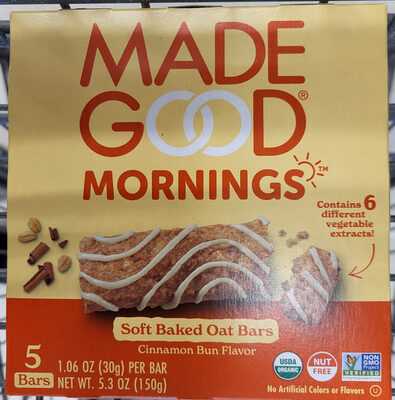
| Bar | Added | Protein | Tier |
|---|---|---|---|
| RXBAR Kids | 0g | 5g | B |
| GoMacro Kids | 3g | 3g | C |
| KIND Kids | 5g | 2g | D |
| Quaker Chewy | 7g | 1g | E |
| Clif Kid ZBar | 9g | 2g | E |
| Nutri-Grain | 12g | 1g | E |
Granola bar vs. cereal bar vs. fruit bar
Parents use “granola bar” for everything rectangular. Labels split three ways:
Crunchy granola (Nature Valley style)
Often two thin bars per pouch. Sugar is listed per serving; kids eat both bars. Crunchy honey oat styles frequently exceed 10g added sugar per pouch.
Chewy kid bars (Quaker Chewy, ZBar)
Oats plus syrup or cane sugar in the first ingredients. Chocolate coatings push Tier E quickly.
Fruit and nut pressed bars (Larabar, some RXBAR)
No added sugar on many flavors, but total sugar from dates or fruit can be high. Still Tier B for added sugar, which fits AHA “added vs. natural” guidance (FDA added vs. total sugars).
How to read the ingredient list in ten seconds
Ingredients are weight-ordered. If sugar, cane syrup, tapioca syrup, brown rice syrup, or honey appears in the first three lines, expect Tier D or E even when the front says “made with whole grain oats.”
Look next for protein and fiber. USDA and CDC school snacking guidance emphasize satiety from protein, fiber, or whole fruit (CDC healthy snacking). A 2g-protein bar with 9g added sugar will not hold most kids until dinner.
School, allergies, and nut-free lunchboxes
Nut-free schools eliminate many protein-rich bars. Sunflower seed butter bars, seed-based crunchy bars, and dairy-forward options may qualify. Filter nut free on browse and read the “may contain” statement even when peanuts are absent.
Made Good markets school-friendly packaging; still verify sugar per mini bar. Nature Valley crunchy varieties are often nut-free but high sugar.
Smarter swaps when kids refuse “healthy” bars
| If they want | Try | Why it works |
|---|---|---|
| Chocolate chip chewy bar | Half a ZBar split with string cheese | Cuts sugar exposure; adds protein |
| Frosted cereal bar | RXBAR mini or fruit Larabar | Sweet flavor from fruit, lower added sugar |
| PB chocolate wafer bar | Apple slices + sunflower butter pouch | No bar label needed; Tier B snack |
| Granola bar daily | Rotate bar days with popcorn + fruit | Breaks sugar habituation |
Swaps work better when texture stays familiar (chewy vs. crunchy).
Questions we get after reading labels
These are not substitutes for your pediatrician or allergist. They explain how we rank bars in the catalog and how official added-sugar guidance maps to lunchboxes.
Why rank bars by added sugar first, not calories?
The 2020 Dietary Guidelines Advisory Committee grouped breakfast cereals and bars among the largest contributors to added sugar intake for people ages 2 and older. Calories still matter, but two bars with the same calories can differ by 10g added sugar. Our A–E tiers use the Added Sugars line so you can compare boxes on equal footing. FDA counts syrups, honey, and sugars added in manufacturing; lactose in plain milk and sugar in whole fruit are not added sugars.
How much room does one bar use in a day?
The American Heart Association scientific statement on children recommends no more than about 25g of added sugar per day for ages 2–18 and avoiding added sugar under age 2. A 9g-added ZBar-style snack is roughly one third of that budget before drinks or dessert. Our chart above plots single snacks against that ceiling so you can see why Tier E bars behave like treat food, not autopilot lunchbox filler.
When is 0g added still a lot of sugar?
Date-based bars often show 0g added with 8–15g total sugar from fruit. That fits Tier B in our system (good for added-sugar math, not necessarily for total sugar limits your clinic gave you). We mark high natural sugar on select pages. That’s It Mini is an extreme example: two ingredients, no added sugar, concentrated fruit sugar.
Two-bar pouches and “mini” sizes
Nature Valley-style packs frequently list one serving = two bars. Kids who eat both need twice the Added Sugars grams on the label. Mini bars sometimes use a smaller serving gram weight with the same sugar density. Compare product pages for the exact serving we stored, not the front photo alone.
Refrigerated bars and school bags
Perfect Bar Kids records 0g added with meaningful protein but needs cold storage for food safety, not for sugar. That is a logistics question separate from tier. For room-temperature weeks, seed or oat bars in Tier C may fit better even with 2–3g added.
Where to go next
Sort all bars by tier, open the auto-ranked top ten, or swap a Tier E habit using our Quaker Chewy and Nutri-Grain alternative pages.
Limits of this ranking
Bars reformulate often. “Less sugar” editions sometimes still land at 5–6g added. This article is for label screening, not treatment of diabetes or eating disorders. For athletes or underweight children, a registered dietitian should set bar frequency and portion, not a blog tier list.
Quick shopping checklist
- Added sugar ≤3g for everyday lunchboxes (Tier C or better).
- At least 2g protein or 3g fiber when possible.
- No nut ingredients if your school requires it.
- Ignore front-of-box “whole grain” until you confirm the Added Sugars line.
- Compare per bar, not per “serving” when the package contains two bars.
That is the same bar parents mean when they search for the granola bar with least sugar. Our catalog sort just does the math at scale.